HVAC companies generate more leads without buying shared ones by building channels they own: an optimized Google Business Profile, Local Services Ads, seasonal Google Ads, fast service pages on their website and instant missed call text back with CRM follow-up. These leads come only to you, so you stop racing other contractors for the same homeowner.
It is 3:00 PM on a sweltering Tuesday in July. A homeowner’s central air conditioner shuts down, sending indoor temperatures rising quickly. Desperate for relief, the homeowner pulls out a smartphone and searches for an immediate local solution.
If your business relies on third-party aggregators, that homeowner’s service request is frequently resold to multiple local service providers simultaneously. You pay for the lead opportunity, only to find yourself competing in a high-speed race where the customer is spammed by several calls at once. Renting shared leads creates a high-friction, price-sensitive sales environment that erodes profit margins.
Generating more HVAC leads without buying shared ones means shifting your business model from renting temporary, multi-vendor contact lists to owning a dedicated, direct local acquisition engine.
Are Shared Leads Destroying Your HVAC Profit Margins?
Purchasing shared leads from third-party networks can seem like a convenient option when launching a home services business. However, relying heavily on third-party aggregators long-term creates cash flow bottlenecks and dilutes your local brand identity.
Why Do New HVAC Companies Buy Shared Leads?
When residential service contractors first launch, they typically lack established brand awareness, domain authority, and organic search rankings. Shared lead vendors offer quick access to incoming customer inquiries, helping new crews cover basic overhead during initial slow months.
Why Do Shared Leads Waste HVAC Marketing Budget Over Time?
Shared leads place service providers into direct price competition before a technician ever steps foot in the home. Because multiple companies contact the same consumer, connection rates and booked appointment ratios suffer. You pay for unvetted inquiries, unserviceable locations, and price-sensitive shoppers looking for budget estimates rather than quality installations. Over time, the waste becomes clear: marketing spend is diverted into building a vendor’s platform equity rather than your company’s long-term brand presence.
Why Should You Build Your Own Direct Lead System?
Building an owned lead infrastructure gives your company independence from external lead brokers. Instead of competing for shared inquiries, your office receives exclusive inbound contact from customers who selected your business directly based on local reputation.
What Are the Benefits of Direct Lead Generation for HVAC Companies?
The main benefits of direct lead generation include complete lead exclusivity, improved cost-per-acquisition control, higher average invoice values, and long-term brand equity. When a customer lands on your owned platform, they interact with your actual staff profiles, verified installation work, and real customer reviews. This establishes immediate credibility before the initial consultation.
How Do Homeowners Find HVAC Contractors Online During Emergencies?
Knowing how homeowners search shows where your local marketing budget works hardest. During an emergency breakdown, homeowners bypass social feeds and long inquiry forms. They perform direct mobile searches on search engines, relying on top local map results, verified local advertising listings, and direct call links to reach a qualified service technician immediately.
How Do Shared Leads Compare to an Owned HVAC Lead System?
To evaluate lead acquisition options, examine the key operational differences between rented aggregator channels and an in-house direct acquisition framework.
| Acquisition Metric | Shared Lead Networks (Aggregators) | Owned Direct HVAC Lead System |
|---|---|---|
| Lead Exclusivity | Non-Exclusive (Resold to multiple vendors) | 100% Exclusive to your business |
| Operational Dynamics | High call friction & heavy price competition | Direct inbound interest & higher trust |
| Cost Efficiency | Variable CPA (Inflated by low connection rates) | Predictable CPA (Decreases as SEO matures) |
| Brand Alignment | Promotes aggregator platform brand | Builds local authority for your business |
| Asset Value | Zero residual value when spending stops | Long-term value in owned digital assets |
| Customer Experience | Customer contacted by multiple bidders | Single, direct connection with your team |
How Can Local Search and Google Help You Win Exclusive HVAC Leads?
Search engine listings represent the primary digital storefront for residential home service contractors. Establishing strong positioning across local search features ensures your business is visible when emergency service calls spike.
What Is the Best Google Business Profile Optimization for HVAC Companies?
A well-optimized Google Business Profile increases visibility within local map packs. Ensure your business name, physical office location, and service categories (HVAC Contractor, Heating Contractor, Air Conditioning Repair Service) are accurately maintained. Regularly collect verified customer reviews, showcase recent installation work, and maintain precise service area coverage to build strong local search relevance.

How Do Google Local Services Ads Work for HVAC Companies?
HVAC Google Local Services Ads (LSA) sit at the top of local search results. Operating on a pay-per-lead structure rather than a traditional cost-per-click model, LSAs connect homeowners directly with verified service contractors. Qualifying businesses earn the Google Verified badge after completing necessary background and license verifications, giving prospective clients added confidence to initiate contact directly.
When Should You Run Seasonal Google Ads for Heating and Cooling?
While organic local search visibility builds compounding long-term equity, seasonal HVAC Google Ads deliver immediate inbound traffic during peak weather transitions.
How Do You Balance Your Website and Local SEO With PPC?
Integrating targeted PPC campaigns with ongoing website and local SEO work ensures short-term call volume and long-term search equity. Launch paid search campaigns prior to high-demand periods in summer and winter, targeting high-intent search queries such as furnace repair near me or AC replacement. Direct this paid traffic to specialized, fast-loading service landing pages designed to convert visits into scheduled appointments.
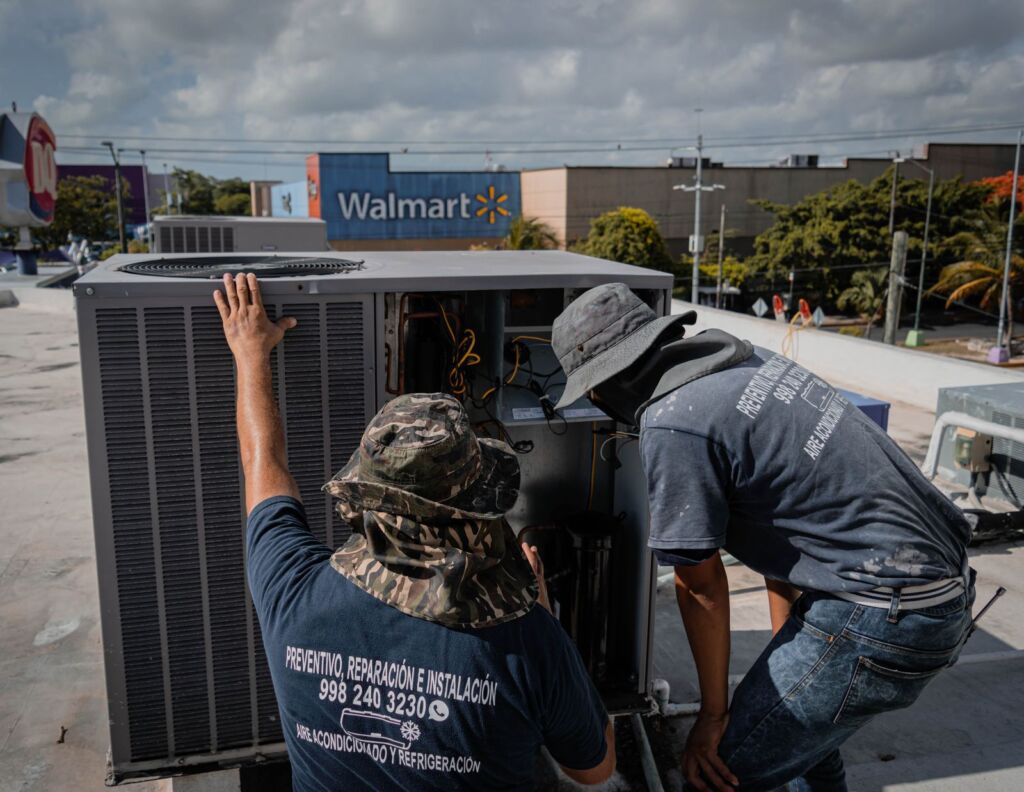
What Should a High-Converting HVAC Contractor Website Include?
Your website operates as a continuous customer service touchpoint. An outdated, slow-loading interface loses potential service opportunities regardless of traffic volume.
Key components of a high-converting contractor website include:
1. Mobile-Optimized Phone Links: Prominently displayed, sticky phone CTAs optimized for mobile devices.
2. Verified Licensing & Guarantees: Clear display of state licenses, insurance coverage, and service warranties.
3. Structured Service & Location Pages: Individual pages for specific services (Heat Pumps, Mini-Splits, Furnace Maintenance) and key coverage areas.
4. Local Social Proof: Integrated customer reviews, job-site project galleries, and authentic team photos.
Does a Website or a Shared Lead Service Build More Long-Term Value?
The choice comes down to ownership. Capital spent on shared lead platforms represents an ongoing operational expense without residual equity. Conversely, investing in an authoritative business website creates a durable digital asset that generates direct organic inquiries over time.
How Do Missed Call Text Backs and CRM Follow-Ups Save Unbooked Leads?
Generating inbound traffic is only the first phase of local customer acquisition. If an office dispatcher misses an incoming call during peak service hours, that homeowner often reaches out to another local contractor.
What Does an Automated Speed-to-Lead Workflow Look Like?
An automated missed call text back and CRM follow-up system helps capture unbooked inquiries. When an incoming call goes unanswered, an automated SMS immediately engages the customer, acknowledging their inquiry and collecting job details so dispatchers can respond promptly and secure the appointment.
- A homeowner calls and nobody picks up.
- An automatic text goes out within seconds: Thanks for calling [Company]. We are with another customer. How can we help with your heating or cooling today?
- The homeowner replies with the problem and address.
- The lead and conversation land in your CRM.
- A dispatcher reviews the details, calls back and books the job.
Can Social Media Replace a Direct HVAC Lead Generation Website?
Many contractors wonder whether social media can replace a lead generation website.
While social media platforms are effective for community branding, customer engagement, and retargeting campaigns, they do not replace search-driven lead infrastructure. When system breakdowns occur in extreme weather, homeowners turn to search engines for immediate service solutions. Social media supports brand visibility, but local search channels drive urgent service bookings.
How Much Does It Cost to Build a Direct Lead Engine for Your HVAC Business?
Moving from shared leads to an owned system shifts spend toward assets you keep. Prices depend on your market and scope, so get quotes for each piece:
| Piece | How it is usually priced | What drives the cost |
|---|---|---|
| Local SEO and Google Business Profile management | Monthly retainer or in-house time | Market size, competition and number of service areas |
| Local Services Ads | Pay per valid lead | Your budget and Google lead prices in your area |
| Conversion-focused website | One-time build plus upkeep | Number of service and city pages |
| CRM and missed call text back | Monthly software subscription | Number of users, phone numbers and texts |
Setup takes money and time, but your cost per booked job usually drops as local rankings, reviews and direct brand searches grow.

How Can You Build a Dedicated Lead Flow for Your HVAC Company?
Transitioning away from third-party lead aggregators requires a clear operational roadmap:
1. Review Current Lead Spend: Track true customer acquisition costs across all current vendor channels.
2. Optimize Local Listings: Secure your Google Business Profile and submit required verification documentation for Local Services Ads.
3. Upgrade Digital Assets: Develop fast, mobile-responsive service pages with clear click-to-call actions.
4. Implement Speed-to-Lead Tools: Set up instant automated SMS responses for missed calls to capture unbooked inquiries.
5. Fund Owned Channels: Invest in proprietary search visibility and direct advertising rather than resold lead lists.
Follow these steps in order and you build exclusive lead flow that does not depend on a vendor.
Is It Time to Stop Renting Shared Leads?
Renting resold leads exposes your business to constant price competition and fluctuating inquiry quality. Building an owned acquisition system centered around local search dominance, high-converting digital assets, and rapid customer follow-up secures exclusive inbound contact and supports long-term operational independence.
Start with the channel that fixes your biggest leak today, whether that is missed calls, a weak Google Business Profile or a slow website, then add the next one.
Want an HVAC lead system you own instead of rent?
Book a free strategy call with Medinyl CEO Abdul Rehman. The call is free and there is no obligation.
Local SEO is the channel HVAC companies own forever. See how our SEO services for home service companies work, and how a boutique hotel group reached page 1 in six months with the same method.
Frequently Asked Questions
Do HVAC companies need to buy shared leads when starting out?
While purchasing shared leads can provide quick initial inquiry volume for new businesses lacking search presence, it is not strictly required. Investing early in local service advertising and search engine optimization helps generate exclusive inquiries without relying on multi-vendor lead lists.
What makes exclusive HVAC leads perform better than shared leads?
Exclusive leads connect the homeowner directly with your office team, eliminating the pressure of competing against several contractors simultaneously. This direct interaction builds initial trust and leads to clearer service discussions.
How long does Google Local Services Ads verification take?
It varies. Google reviews business licenses, insurance and background checks before your ads can run, so submit complete documents early and track the status in your Local Services Ads account.
Why are automated missed call text backs important for service contractors?
Homeowners seeking emergency repairs frequently contact another service provider if their initial call goes to voicemail. Automated text messaging immediately acknowledges the customer’s request via SMS, helping retain the lead while dispatchers prepare to respond.
How do Google Search Ads differ from Google Local Services Ads?
Google Search Ads operate on a pay-per-click (PPC) model where advertisers pay when a user clicks an ad link. Google Local Services Ads (LSA) operate on a pay-per-lead structure where advertisers pay for valid service inquiries initiated via phone, message, or direct booking.