Generate high-quality B2B leads by defining your ideal customer profile first, then combining helpful search content with personalized LinkedIn and email outreach. Send interested prospects to a focused landing page, qualify every inquiry by fit and intent, log it in a CRM and follow up fast. Judge success by qualified opportunities and revenue, not lead volume.
Generating B2B leads is not about collecting the largest possible list of names. It is about finding businesses that fit your offer, reaching the people involved in the buying decision and giving them a relevant reason to start a conversation. A smaller group of well-matched prospects is often worth more than a large list with little interest or buying potential.
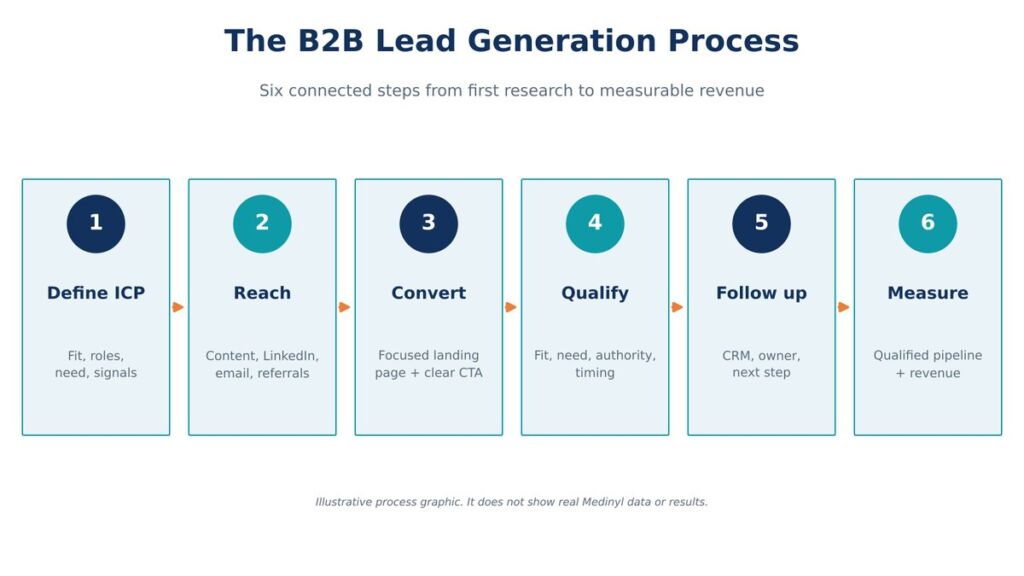
A reliable B2B lead generation process combines a clear ideal customer profile (ICP), useful inbound content, targeted LinkedIn and email prospecting, focused landing pages, lead qualification and consistent follow-up. The right mix depends on your market, sales cycle, offer and resources.
In this guide, we explain how to build that process, how inbound and outbound channels work together and which metrics show whether your lead generation activity is creating real sales opportunities.
Who Should You Target Before You Look for Leads?
An ideal customer profile describes the type of company most likely to need and benefit from your offer. Without one, prospecting gets too broad: the team contacts businesses that look active but have no clear need, budget, authority or reason to act.
Build your ICP around practical criteria such as:
- Industry and business model: which sectors have the problem your service solves?
- Company size: what employee range, revenue band or operating scale is a realistic fit?
- Geography: which countries, regions or cities can you serve well?
- Decision-makers: which job roles influence or approve the purchase?
- Business need: what operational challenge makes your offer relevant?
- Buying signals: what recent event might create a reason to review providers, such as expansion, a new leadership hire or a change in technology?
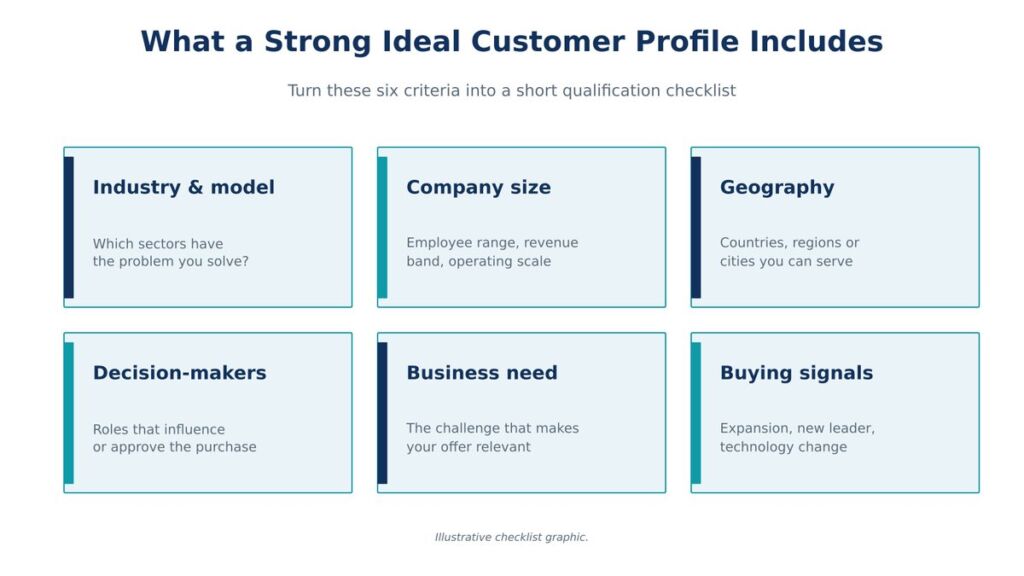
Turn these criteria into a short qualification checklist and review a sample of target accounts before building a large prospect list. If many companies fail the checklist, refine the ICP before increasing outreach volume.
Should You Use Inbound or Outbound Lead Generation?
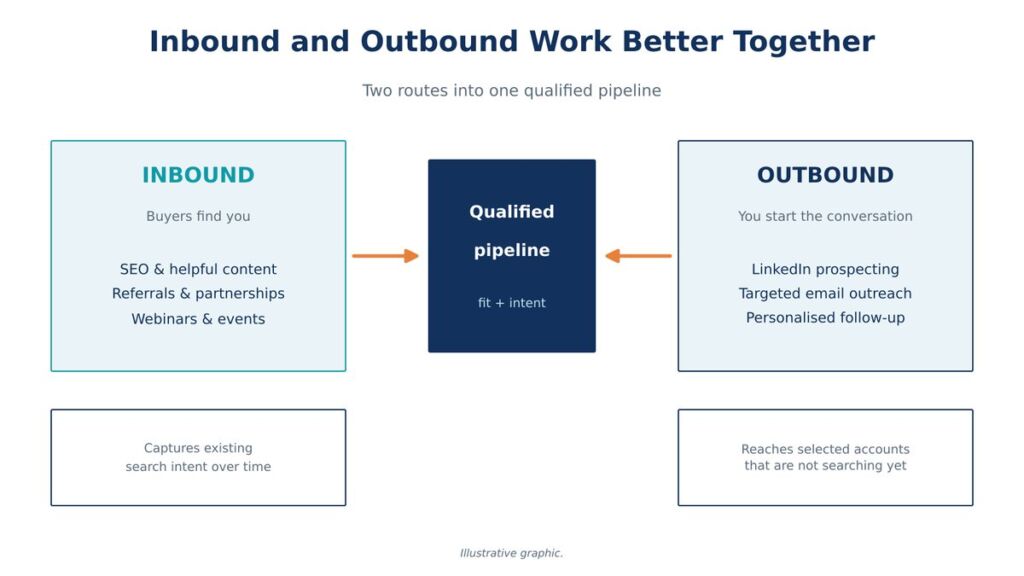
Inbound and outbound lead generation solve different problems. Inbound helps buyers discover your business while they research a need. Outbound lets your team start relevant conversations with selected companies that may not be searching yet. A balanced B2B strategy uses both instead of depending on one channel.
| Channel | How it contributes | What to monitor |
|---|---|---|
| SEO and helpful content | Attracts people researching a problem or comparing solutions. | Relevant organic visits, inquiry quality, qualified opportunities. |
| LinkedIn content and prospecting | Builds visibility and starts conversations with relevant professionals. | Target-account engagement, positive replies, qualified meetings. |
| Email outreach | Reaches selected business contacts with a relevant, concise message. | Delivery health, positive replies, opt-outs, qualified meetings. |
| Referrals and partnerships | Introduces your business through existing trust and complementary audiences. | Referral source, fit, opportunity and win rate. |
| Webinars and events | Gives interested people a focused reason to engage with your expertise. | Registrations, attendance, follow-up conversations and pipeline. |
How Do You Use LinkedIn to Reach Decision-Makers?
LinkedIn supports B2B lead generation because professional profiles, company information and industry conversations help teams identify relevant people and accounts. LinkedIn’s own B2B lead generation campaign guide makes the same point: targeting should follow a clear audience definition. It works best when messages reflect the recipient’s role or business context.
A practical LinkedIn prospecting process looks like this:
Avoid generic mass messages, misleading personalization and repetitive follow-ups. Respect platform rules and each recipient’s preferences. The goal is a relevant business conversation, not the highest message count.
How Should You Write B2B Outreach Messages?
A good first message makes it easy for the recipient to understand why you contacted them. It should be short, accurate and tied to something relevant about their company or role. Skip exaggerated claims, vague compliments and long lists of every service you offer.
| Part | What it does |
|---|---|
| Context | Mentions a relevant company, role, market or business observation. |
| Relevance | Explains briefly why that context may connect to a problem you solve. |
| Low-pressure next step | Asks one useful question or offers a relevant resource. |
Personalization should be genuine. Do not invent a trigger event or imply that you researched a company when you have not. Track which message themes lead to positive, qualified conversations and improve them based on actual replies.
What Makes a B2B Landing Page Convert?
When a prospect wants more information, send them to a page that matches the conversation. A general homepage may not answer the specific questions raised by a LinkedIn message, email or campaign. A focused landing page explains one service and guides the visitor toward one clear action. We cover this in more depth in our guide on how a business website generates more customers.
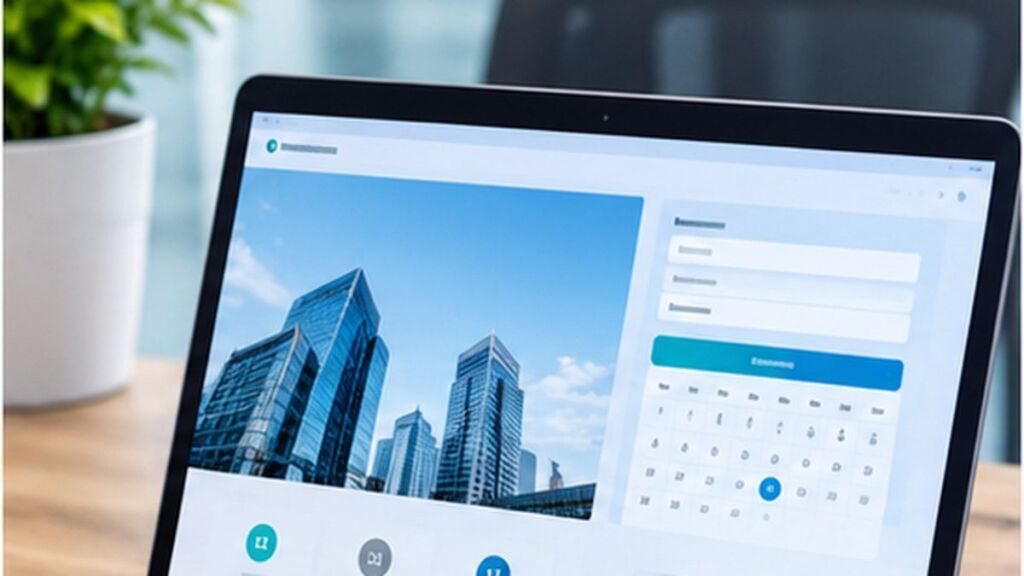
A useful B2B landing page should include:
- A clear headline explaining who the service helps and what it does.
- A short explanation of the business problem and the proposed solution.
- Deliverables, process steps and realistic expectations.
- Relevant proof such as genuine testimonials, approved client examples or verifiable case studies.
- A clear call to action, such as requesting a consultation or a proposal.
- A short form that asks only for what your team needs to respond.
Make sure the page works well on mobile, loads reliably and shows a clear confirmation after a form is submitted. Do not publish invented client logos, testimonials or performance figures. If detailed case studies are not available, explain the process and scope honestly.
Want a lead system built around your ideal customer?
Book a free strategy call with Medinyl CEO Abdul Rehman. The call is free and there is no obligation.
Which Resources Help Buyers Decide?
Not every potential customer is ready to book a call. Some are still defining the problem, comparing approaches or building internal agreement. A useful resource gives these people a reason to engage without forcing a sales conversation.
Depending on your audience, this could be a practical checklist, a short industry guide, a webinar, a comparison worksheet or a case study. Make sure the resource answers a real question and connects closely to the service you provide. If you ask for contact details to access it, explain what the person will receive and how you will use their information.
How Do You Qualify B2B Leads?
A lead is not automatically a sales opportunity. Before assigning it to a sales rep, check whether the company fits your target market and whether there is a real reason to talk. Qualification helps teams prioritize their time instead of treating every form submission as equally valuable.
A simple framework, similar in spirit to the classic BANT approach (budget, authority, need, timing), reviews:
| Check | Question to answer |
|---|---|
| Fit | Does the company match the target industry, size and service area? |
| Need | Has the prospect described a problem your business can solve? |
| Authority | Is the contact a decision-maker or able to involve one? |
| Timing | Is there a current project, deadline or reason to evaluate a solution? |
| Commercial fit | Is the likely scope realistic for your service and pricing model? |
You can record these details in a CRM and apply a simple lead score. Keep the scoring rules easy to understand and review them against actual sales outcomes. A score should help prioritize follow-up. It should not replace a conversation or be treated as proof that someone will buy.
How Does a CRM Improve Lead Follow-Up?
When leads arrive from forms, LinkedIn campaigns, referrals or email, the team needs one reliable way to record and manage them. A customer relationship management (CRM) platform centralizes contact details, lead source, qualification notes, ownership and next steps.
Set it up so each new inquiry is assigned to a responsible person and gets an appropriate response. Depending on the workflow, automation can send a confirmation, notify the right team member, create a follow-up task and update the opportunity stage. Automated messages should be accurate and should never pretend a person reviewed a request when they have not.
Create a follow-up schedule that suits your sales cycle. Some inquiries need a prompt response, while others need useful information over time. Keep messages relevant, respect opt-outs and communication preferences, and follow the privacy and marketing rules that apply where you operate.
Which Metrics Show Lead Quality?
A campaign can generate many form submissions without creating real sales opportunities. Measure what happens after a lead enters the pipeline so you can see which channels bring the best-fit prospects and which steps need work.
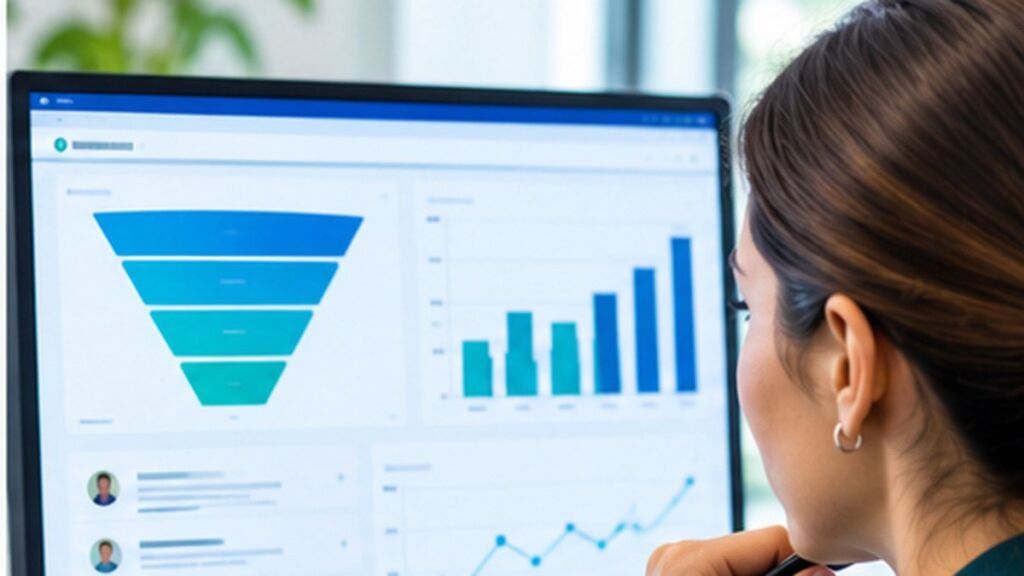
| Metric | What it tells you |
|---|---|
| Lead-to-qualified-lead rate | What share of incoming leads meet your qualification criteria. |
| Qualified-meeting rate | How many qualified leads move to a useful sales conversation. |
| Opportunity creation | How many conversations become real sales opportunities. |
| Cost per qualified lead | What it costs to generate a lead that meets your criteria. |
| Pipeline and revenue by source | Which channels contribute to opportunities and closed business. |
| Follow-up performance | Whether inquiries are assigned and handled within your service expectations. |
Use analytics, campaign tracking, CRM reports and sales feedback together. Review results over a suitable period, because B2B buying cycles are often longer than a single campaign. Do not optimize for clicks or cheap form fills if they do not turn into qualified opportunities.
How Do You Make Lead Content Easy to Find in Google and AI Search?
Search engine optimization (SEO) helps buyers find useful pages when they search for problems, services and solutions. Use a clear page title, one descriptive H1, logical subheadings, concise explanations and internal links to your relevant service pages. Include the main topic naturally. Repeating exact-match keywords to raise their frequency does not help.
For AI-powered search and answer engines, the same foundations matter: publish accurate, original, well-organized information that directly answers real questions. Google says its AI features use the same SEO best practices as regular Search, with no special optimization needed. Focus on indexable pages, helpful people-first content, clear site structure and a good visitor experience. Our guide on generative search engine optimization for small businesses goes deeper.
Use structured data that accurately describes the page, such as Article, Organization, Person and BreadcrumbList, and keep it consistent with visible content. It helps search engines understand a page, but it does not guarantee a rich result or an AI citation.
What Does a 30-Day B2B Lead Generation Plan Look Like?
| Week | Focus | What to do |
|---|---|---|
| Week 1 | Define the audience | Choose one ICP, one core offer, one target market and the roles involved in buying. Review a sample of target accounts. |
| Week 2 | Build the conversion path | Create or improve one service landing page, one useful resource, a short inquiry form and a clear next step. |
| Week 3 | Launch focused activity | Publish relevant content, start a small, carefully targeted LinkedIn or email test and activate referral conversations. |
| Week 4 | Review and refine | Check lead fit, positive replies, qualified meetings, CRM records and follow-up. Keep what works and adjust what does not. |
How Does Medinyl Support B2B Lead Generation?
Medinyl helps businesses connect the key parts of B2B customer acquisition: targeted LinkedIn prospecting frameworks, focused landing pages, CRM integration and lead scoring, and workflow automation for inquiry alerts and follow-up. Explore Medinyl’s lead generation services for lead funnels, outreach systems, CRM automation and qualification workflows.
These pieces work best as one connected process: define the right audience, create a relevant reason to engage, make the next step clear and make sure every inquiry is recorded and handled. You can also learn more about Medinyl’s business development services.
Ready to improve your B2B lead generation process?
Book a free strategy call with Medinyl CEO Abdul Rehman to review your prospecting, landing pages and CRM follow-up. Prefer to write in? Use our contact page.
Frequently Asked Questions
What is B2B lead generation?
B2B lead generation is the process of identifying businesses that may need a product or service, reaching relevant decision-makers and creating opportunities for a sales conversation. It can include inbound channels such as SEO and content, and outbound channels such as LinkedIn and email.
How do you generate high-quality B2B leads?
Define a clear ideal customer profile, focus on companies with a relevant need, reach the right roles with useful messaging and provide a clear next step. Qualify inquiries by fit and intent, then track follow-up and sales outcomes in a CRM.
Is LinkedIn effective for B2B lead generation?
LinkedIn can help B2B teams identify companies and professionals, share expertise and start relevant conversations. Results depend on audience fit, message quality, offer relevance and consistent follow-up. Avoid generic mass messaging.
What is the difference between inbound and outbound lead generation?
Inbound lead generation attracts people who discover your business through search, content, events or referrals. Outbound lead generation means proactively contacting selected companies or decision-makers through channels such as LinkedIn and email. Many B2B teams use both.
What makes a B2B lead qualified?
A qualified lead fits your target customer profile and shows a relevant need or interest. Teams may also consider the contact’s role, buying authority, timing, budget and whether the requested work matches the service offered.
Why should B2B businesses use a CRM?
A CRM organizes contacts, records where inquiries came from, assigns follow-up, tracks conversations and monitors opportunities. It gives sales and marketing one shared view of the pipeline.
How can SEO help generate B2B leads?
SEO helps relevant service pages and educational content appear when buyers search for related problems and solutions. Useful content, clear page structure, accurate metadata and a good website experience help attract and convert relevant visitors.
How long does B2B lead generation take to produce results?
Timing varies by industry, offer, channel, competition and sales cycle. Targeted outbound can create conversations sooner, while SEO and content usually need sustained work before they build meaningful organic visibility. Track qualified opportunities instead of assuming a fixed timeline.
Final Thoughts: What Matters Most in B2B Lead Generation?
High-quality B2B lead generation comes from matching the right offer with the right companies and giving decision-makers a relevant way to engage. Start with a focused customer profile, combine channels that suit your market, make landing pages useful, qualify inquiries carefully and build a follow-up process your team can sustain. Measure the opportunities and revenue created, then improve the system using real results.